

Complete Guide to EV Bike Batteries in Pakistan: Prices, Types & Where to Buy in 2026

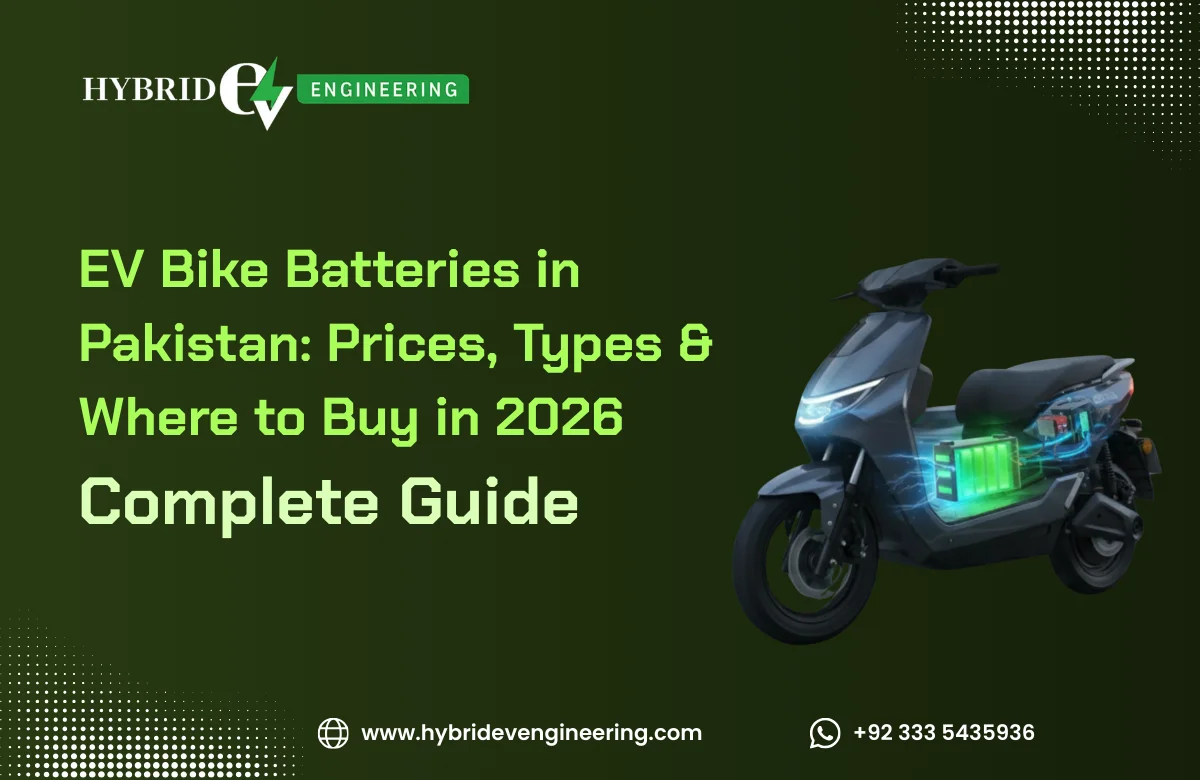
If you own an electric bike or scooty in Pakistan, you already know that the battery is the heart of your vehicle. Whether your current battery has lost its punch, you’re tired of the limited range, or you simply want better performance from your EV, upgrading to the right battery can transform your riding experience.
This comprehensive guide covers everything you need to know about EV bike batteries in Pakistan from understanding battery types and voltage options to current 2026 prices and where to buy quality lithium batteries in Islamabad, Rawalpindi, and across Pakistan.
Why Your EV Bike Battery Matters More Than You Think
Your electric bike’s performance isn’t just about the motor, it’s fundamentally determined by your battery. A quality battery affects your daily commute range, how fast your bike accelerates, the top speed you can achieve, and how long before you need another replacement.
Most EV bikes and scooties sold in Pakistan come equipped with basic lead-acid batteries. While these get the job done initially, riders quickly discover their limitations: heavy weight, short lifespan, gradual capacity loss, and disappointing range that gets worse every few months.
That’s why thousands of EV owners across Pakistan are now upgrading to lithium-ion batteries and experiencing what their electric vehicles were truly capable of all along.
Types of E-Bike Batteries: Lead-Acid vs Lithium-Ion
Before diving into specifications and prices, let’s understand the two main battery technologies available for electric bikes in Pakistan.
Lead-Acid Batteries: The Old Technology
Lead-acid batteries have been around for over 150 years. They’re cheap to manufacture, which is why most budget EV bikes come with them. However, this “savings” comes at a significant cost to riders.
The problems with lead-acid batteries:
Lead-acid batteries are extremely heavy, typically weighing 25-40 kg for a standard EV bike setup. This extra weight reduces your range, slows acceleration, and makes handling more difficult. They also have a short lifespan of only 200-300 charge cycles, meaning you’ll likely need a replacement within 1-2 years of regular use.
Capacity degradation is another major issue. Lead-acid batteries lose capacity quickly after just 6 months, you might notice your range has dropped by 20-30%. They also suffer from the “memory effect” and require regular maintenance including water top-ups and terminal cleaning.
Perhaps most frustrating is the slow charging time. Lead-acid batteries typically need 8-12 hours for a full charge, making them impractical for riders who need to top up during the day.
Lithium-Ion Batteries: The Modern Standard
Lithium-ion technology, particularly Li-ion and LiFePO₄ (Lithium Iron Phosphate) variants, represents a massive leap forward in EV battery technology. These are the same batteries powering Tesla vehicles, modern smartphones, and premium electric bikes worldwide.
Why lithium batteries are worth the investment:
The weight difference alone is remarkable. A lithium battery pack providing the same energy as a lead-acid setup weighs 60-70% less. This translates directly to better range, improved acceleration, and easier handling of your EV bike.
Lifespan is where lithium truly shines. Quality lithium batteries deliver 2,000+ charge cycles that’s 8-10 years of daily use for most riders. The capacity remains stable throughout most of this lifespan, so your range in year five is nearly the same as year one.
Fast charging capability changes how you use your EV. Most lithium batteries reach 80% charge in 2-3 hours, with full charge in 4-5 hours. Some riders charge during lunch breaks and have enough range for the entire day.
The built-in Battery Management System (BMS) in quality lithium batteries protects against overcharging, over-discharging, short circuits, and temperature extremes making them safer and more reliable than lead-acid alternatives.
Quick Comparison: Lead-Acid vs Lithium
| Feature | Lead-Acid | Lithium-Ion (Li-ion/LiFePO₄) |
|---|---|---|
| Weight | 25-40 kg | 8-15 kg |
| Lifespan | 1-2 years (200-300 cycles) | 8+ years (2,000+ cycles) |
| Charging Time | 8-12 hours | 3-5 hours |
| Range Consistency | Degrades quickly | Stable for years |
| Maintenance | Regular water top-up required | Maintenance-free |
| Efficiency | 70-80% | 95-98% |
| Initial Cost | Lower | Higher (but better value long-term) |
When you calculate the total cost of ownership over 5-8 years, lithium batteries actually cost less than repeatedly replacing lead-acid batteries while delivering superior performance throughout.
How to Choose the Right EV Bike Battery
Selecting the perfect battery for your electric bike involves matching three key specifications to your vehicle and riding needs: voltage, capacity (Ah), and compatibility.
Step 1: Determine Your Required Voltage
Your EV bike’s motor is designed to work with a specific voltage. Using the wrong voltage can damage your motor or controller, so this is the most critical specification to match.
Check your existing battery or your bike’s manual for the voltage rating. Common voltages for EV bikes in Pakistan include 48V, 60V, 72V, and 76V. If you’re unsure, look at your charger it usually indicates the battery voltage it’s designed for.
Important: Always match the voltage exactly to your bike’s requirements. A 60V bike needs a 60V battery you cannot use a 48V or 72V battery as a substitute.
Step 2: Choose Your Capacity (Ah)
Amp-hours (Ah) determine how much energy your battery stores, which directly translates to range. Higher Ah means more kilometers per charge.
Consider your daily commute and typical usage patterns. If you travel 30-40 km daily, a 30Ah battery provides comfortable range with reserve. For longer commutes of 50-70 km, consider 40Ah capacity. Heavy riders, hilly terrain, or high-speed riding requires extra capacity.
A good rule of thumb: choose a battery that provides at least 30-40% more range than your typical daily travel. This accounts for battery degradation over time, unexpected detours, and running accessories like lights.
Step 3: Verify Compatibility
Beyond voltage, ensure the battery physically fits your bike’s battery compartment and that the connectors match. Quality battery suppliers like Hybrid EV Engineering can help you verify compatibility with your specific EV model before purchase.
Choosing Based on Your Riding Style
Daily Commuters (20-40 km/day): A 20-30Ah battery at your bike’s voltage provides reliable daily transportation with room for occasional longer trips.
Extended Range Riders (40-70 km/day): Opt for 40Ah or 60Ah capacity to ensure you never face range anxiety during your commute.
Performance Enthusiasts: Higher capacity batteries (50-60Ah) combined with higher voltage (72V-76V) deliver the best acceleration and top speed while maintaining excellent range.
Commercial/Delivery Use: Choose maximum capacity (60Ah) at appropriate voltage for all-day operation without charging breaks.
Voltage Options Explained: 48V, 60V, 72V, and Beyond
Understanding voltage helps you appreciate why your bike performs the way it does and what upgrading might achieve.
48V Systems
The 48V Li-ion battery is the entry point for many EV bikes and scooties in Pakistan. These systems are common in smaller scooties and budget-friendly electric bikes.
With 48V lithium batteries, you can expect ranges of 30-120 km depending on capacity (20Ah to 60Ah). This voltage is ideal for city commuting, neighborhood travel, and riders who prioritize efficiency over speed.
51.2V Systems
The 51.2V option is a slight step up from 48V, offering marginally better performance while maintaining compatibility with many 48V-rated systems (always verify with your bike’s specifications).
Range expectations span 30-120 km based on capacity selection, making this an excellent choice for riders wanting a bit more punch from their daily commuter.
60V Systems
The 60V configuration represents the sweet spot for many Pakistani EV bike owners. This voltage class powers mid-range electric bikes with better acceleration and higher top speeds than 48V systems.
Expect 40-145 km range depending on capacity. The 60V platform is popular among riders who want noticeable performance improvements over basic scooties while maintaining excellent efficiency.
63V Systems
For bikes designed around 63V systems, this voltage offers a performance bump over 60V with ranges of 40-145 km. This is increasingly common in newer, more powerful EV models hitting the Pakistani market.
72V Systems
The 72V platform is where serious performance begins. These high-voltage systems power larger electric motorcycles and performance-focused EV bikes.
With 72V lithium batteries, you get 48-173 km range along with significantly improved acceleration, higher top speeds, and better hill-climbing ability. This is the choice for riders who take their EV performance seriously.
76V Systems
The 76V battery option represents the premium tier for high-performance electric bikes. With ranges of 48-173 km and superior power delivery, this voltage class is ideal for demanding riders and performance-focused builds.
Which Voltage Is Right for You?
Important: You must match your battery voltage to your bike’s requirements. The voltage isn’t something you choose based on preference it’s determined by your vehicle’s motor and controller specifications.
If you’re unsure about your bike’s voltage requirements, contact us on WhatsApp at +92 333 5435936 with your bike’s make and model, and we’ll help you identify the correct specification.
EV Bike & Scooty Battery Prices in Pakistan (2026)
Here’s the complete pricing breakdown for Li-ion/LiFePO₄ EV bike batteries available at Hybrid EV Engineering. All batteries feature premium EVE cylindrical cells, 8-year lifecycle, fast charging capability, and compatibility with standard EV chargers.
48V Li-ion/LiFePO₄ EV Bike Battery Prices
| Capacity (Ah) | Expected Range | Price (PKR) |
|---|---|---|
| 20 Ah | 30-40 km | Rs 56,000 |
| 30 Ah | 50-60 km | Rs 82,000 |
| 40 Ah | 65-80 km | Rs 103,000 |
| 60 Ah | 100-120 km | Rs 150,000 |
51.2V Li-ion/LiFePO₄ EV Bike Battery Prices
| Capacity (Ah) | Expected Range | Price (PKR) |
|---|---|---|
| 20 Ah | 30-40 km | Rs 56,000 |
| 30 Ah | 50-60 km | Rs 82,000 |
| 40 Ah | 65-80 km | Rs 103,000 |
| 60 Ah | 100-120 km | Rs 150,000 |
60V Li-ion/LiFePO₄ EV Bike Battery Prices
| Capacity (Ah) | Expected Range | Price (PKR) |
|---|---|---|
| 20 Ah | 40-50 km | Rs 67,000 |
| 30 Ah | 60-75 km | Rs 105,000 |
| 40 Ah | 80-95 km | Rs 125,000 |
| 60 Ah | 120-145 km | Rs 183,000 |
63V Li-ion/LiFePO₄ EV Bike Battery Prices
| Capacity (Ah) | Expected Range | Price (PKR) |
|---|---|---|
| 20 Ah | 40-50 km | Rs 67,000 |
| 30 Ah | 60-75 km | Rs 105,000 |
| 40 Ah | 80-95 km | Rs 125,000 |
| 60 Ah | 120-145 km | Rs 183,000 |
72V Li-ion/LiFePO₄ EV Bike Battery Prices
| Capacity (Ah) | Expected Range | Price (PKR) |
|---|---|---|
| 20 Ah | 48-58 km | Rs 79,000 |
| 30 Ah | 72-87 km | Rs 115,000 |
| 40 Ah | 96-115 km | Rs 149,000 |
| 60 Ah | 144-173 km | Rs 219,000 |
76V Li-ion/LiFePO₄ EV Bike Battery Prices
| Capacity (Ah) | Expected Range | Price (PKR) |
|---|---|---|
| 20 Ah | 48-58 km | Rs 79,000 |
| 30 Ah | 72-87 km | Rs 115,000 |
| 40 Ah | 96-115 km | Rs 149,000 |
| 60 Ah | 144-173 km | Rs 219,000 |
Price Summary: Starting Prices by Voltage
| Voltage | Starting Price | Capacity Range |
|---|---|---|
| 48V | Rs 56,000 | 20Ah – 60Ah |
| 51.2V | Rs 56,000 | 20Ah – 60Ah |
| 60V | Rs 67,000 | 20Ah – 60Ah |
| 63V | Rs 67,000 | 20Ah – 60Ah |
| 72V | Rs 79,000 | 20Ah – 60Ah |
| 76V | Rs 79,000 | 20Ah – 60Ah |
Compatible EV Bike Brands in Pakistan
Our lithium EV batteries are compatible with all major electric bike and scooty brands available in Pakistan. Whether you own a locally assembled EV or an imported model, we provide battery solutions that fit your vehicle’s specifications.
Popular EV brands we support:
Jolta Electric – One of Pakistan’s pioneering EV manufacturers with a range of electric bikes and scooties. Our batteries are fully compatible with Jolta’s 48V, 60V, and 72V models.
Vlektra – Known for stylish electric scooters, Vlektra models work seamlessly with our lithium battery upgrades for extended range and better performance.
Metro EV – A trusted name in Pakistani electric vehicles, Metro’s bikes and scooties benefit significantly from lithium battery upgrades.
Crown Electric – Crown’s electric lineup pairs perfectly with our high-performance lithium batteries for riders seeking reliability.
Yadea – This international brand has gained popularity in Pakistan, and our batteries provide excellent compatibility with Yadea’s voltage specifications.
Sunra – Another global brand with Pakistani presence, Sunra electric bikes work great with our EVE-cell lithium batteries.
Super Power EV – The electric variants from Super Power can be upgraded to lithium for transformative performance improvements.
Road Prince Electric – Road Prince’s electric models see significant range and performance gains with our battery solutions.
United EV – United’s electric bikes are compatible with our full range of voltage options.
Benelli Electric – Premium Benelli electric motorcycles benefit from our high-voltage lithium batteries for performance-focused riding.
Don’t see your brand listed? Contact us with your bike’s make, model, and current battery specifications, and we’ll confirm compatibility and recommend the ideal battery upgrade.
Where to Buy EV Bike Batteries in Islamabad/Rawalpindi
Finding quality EV batteries in Pakistan can be challenging. The market is flooded with low-quality imports and batteries with exaggerated specifications. Here’s why riders across Pakistan trust Hybrid EV Engineering for their battery needs.
Why Choose Hybrid EV Engineering?
Premium EVE Cylindrical Cells: We use only genuine EVE brand lithium cells, a globally recognized manufacturer known for consistency and reliability. No cheap knockoffs or recycled cells.
8-Year Lifecycle: Our batteries are engineered for 2,000+ charge cycles, translating to approximately 8 years of daily use. This isn’t marketing speak it’s what quality lithium batteries actually deliver.
Built-in BMS Protection: Every battery includes an advanced Battery Management System protecting against overcharge, over-discharge, short circuit, and thermal issues.
Fast Charging Compatible: All our batteries support fast charging with standard EV chargers, reaching 80% capacity in 2-3 hours.
Expert Guidance: Not sure which battery fits your bike? Our team helps you match specifications to your exact requirements no guesswork, no compatibility issues.
Visit Our Islamabad Location
For customers in Islamabad, Rawalpindi, and nearby cities, you can visit our facility to see batteries firsthand, discuss your requirements, and get expert advice:
Address: Plot 315, Street 3, I-9/3 Industrial Area, Islamabad 46000
Google Maps: Get Directions →
Nationwide Delivery Across Pakistan
Can’t visit in person? No problem. We deliver quality lithium batteries anywhere in Pakistan. Simply contact us via WhatsApp, confirm your specifications, and we’ll ship your battery securely to your doorstep.
Order via WhatsApp: +92 333 5435936
When contacting us, please share your EV bike’s brand and model, your current battery voltage (if known), your typical daily travel distance, and any specific requirements or questions you have.
EV Bike Battery Maintenance Tips
Quality lithium batteries require minimal maintenance compared to lead-acid, but following these practices will maximize your battery’s lifespan and performance.
Charging Best Practices
Avoid complete discharge: Try not to run your battery below 20% regularly. Deep discharges stress the cells and reduce overall lifespan. The ideal operating range is between 20% and 80%.
Don’t overcharge: While the BMS protects against overcharging, it’s good practice to disconnect the charger once fully charged. Avoid leaving batteries on charge overnight unnecessarily.
Use the correct charger: Always use a charger rated for your battery’s voltage. Using mismatched chargers can damage cells and void warranty coverage.
Charge at moderate temperatures: Avoid charging immediately after a long ride when the battery is warm. Let it cool for 15-30 minutes first. Similarly, don’t charge in extreme cold.
Storage Guidelines
Maintain partial charge during storage: If storing your EV for extended periods (weeks or months), keep the battery at 40-60% charge. Storing at full charge or empty degrades capacity over time.
Store in cool, dry conditions: Avoid leaving your EV in direct sunlight for extended periods. Excessive heat accelerates battery degradation.
Periodic check-ups: If stored for months, check battery voltage periodically and top up if it drops significantly.
Usage Tips for Maximum Range
Smooth acceleration: Aggressive starts consume significantly more power than gradual acceleration. Smooth riding extends your range considerably.
Maintain tire pressure: Under-inflated tires increase rolling resistance, forcing your motor to work harder and drain the battery faster.
Reduce unnecessary weight: Remove heavy items you don’t need. Every extra kilogram reduces your range.
Use regenerative braking: If your EV bike supports it, regenerative braking recovers energy during deceleration, extending your range.
Warning Signs to Watch For
Contact a battery specialist if you notice significantly reduced range (more than 30% drop from normal), the battery not holding charge, unusual heat during charging or use, or any swelling or physical damage to the battery case.
Frequently Asked Questions (FAQs)
How long does an EV bike battery last in Pakistan?
Lead-acid batteries typically last 1-2 years with regular use. Quality lithium batteries like those from Hybrid EV Engineering last 8+ years or approximately 2,000 charge cycles. This makes lithium significantly more economical over time despite higher upfront costs.
Can I upgrade my lead-acid EV bike to lithium?
Yes, absolutely. Most EV bikes originally equipped with lead-acid batteries can be upgraded to lithium. You need to match the voltage exactly (e.g., replace a 60V lead-acid with a 60V lithium). The benefits include 60-70% weight reduction, 3-4x longer lifespan, faster charging, and better range consistency.
What is the price of an EV scooty battery in Pakistan?
Lithium EV scooty batteries start from Rs 56,000 for a 48V 20Ah configuration. Prices vary based on voltage and capacity higher voltage and higher Ah ratings cost more but provide better performance and longer range. See the complete pricing tables above for all options.
Which battery is best for electric bikes lithium or lead-acid?
Lithium is superior in virtually every metric: lighter weight, longer lifespan, faster charging, better efficiency, no maintenance, and consistent performance over years. Lead-acid only wins on initial purchase price, but total cost of ownership over 5+ years actually favors lithium due to its longevity.
How far can I travel on a single charge?
Range depends on battery voltage, capacity (Ah), your riding style, rider weight, terrain, and speed. As a general guide, 48V 30Ah provides 50-60 km while 72V 40Ah provides 96-115 km. See our detailed range tables above for specific configurations.
Do you deliver batteries outside Islamabad?
Yes, we deliver anywhere in Pakistan. Orders can be placed via WhatsApp at +92 333 5435936. We securely package all batteries for safe transit.
How do I know which voltage battery my EV bike needs?
Check your existing battery, charger, or bike manual for voltage specifications. If unsure, send us your bike’s brand and model via WhatsApp and we’ll help identify the correct voltage.
What warranty do you provide?
Our batteries come with comprehensive warranty coverage. Contact us directly for specific warranty terms based on your purchase.
Can I use my existing charger with a new lithium battery?
In most cases, yes if the charger matches your battery’s voltage. For example, a 60V charger works with a 60V lithium battery. However, some older lead-acid chargers may not be optimal for lithium. Contact us to verify charger compatibility.
How long does it take to charge a lithium EV battery?
Most lithium batteries reach 80% charge in 2-3 hours and full charge in 4-5 hours significantly faster than the 8-12 hours typical for lead-acid batteries.
Ready to Upgrade Your EV Bike Battery?
Whether you’re tired of your declining lead-acid battery, want to extend your EV’s range, or simply demand better performance from your electric bike, a quality lithium battery upgrade makes all the difference.
Contact Hybrid EV Engineering today:
WhatsApp: +92 333 5435936
Visit Us: Plot 315, Street 3, I-9/3 Industrial Area, Islamabad 46000 (Get Directions)
Browse Our Batteries: View All EV Bike Batteries →
Tell us about your EV bike, your riding needs, and any questions you have. We’ll recommend the perfect battery solution no pressure, just expert guidance to help you make the right choice.
 EV Bike Batteries
72V 32Ah Lithium Battery Price in Pakistan: 2026 Guide
A practical guide to 72V lithium battery prices in Pakistan, what 32Ah means for range, and how to match a pack to your e-bike controller and motor.
 Hybrid Battery
Honda Fit Hybrid Battery Replacement Guide for Pakistan
The Honda Fit Hybrid is one of the most practical compact cars on Pakistani roads. Its combination of fuel efficiency,…
EV Bike Batteries
60V 40Ah Lithium Battery Price in Pakistan: 2026 Buying Guide
The 60V 40Ah lithium battery price in Pakistan is Rs 125,000, checked in October 2026. Here is what it runs, how far it goes, and how to match it to your bike.