
Best Lithium Solar Battery for Home in Pakistan: 2026 Guide

Solar power adoption in Pakistan is growing rapidly. Rising electricity costs, frequent load shedding, and increasing awareness of clean energy are pushing thousands of homeowners to install solar systems. But there is one component that often gets overlooked despite being crucial: the battery.
Quick answer
Which lithium solar battery is best for my home in Pakistan?
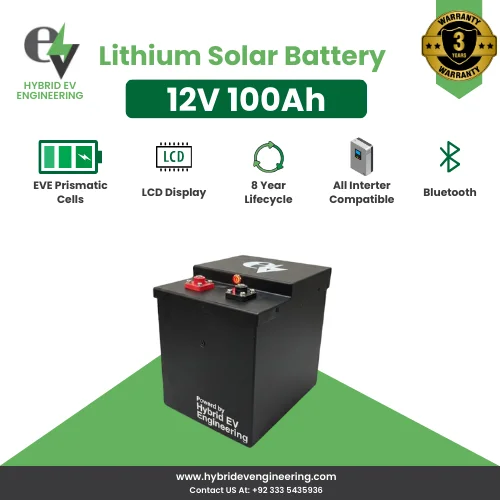
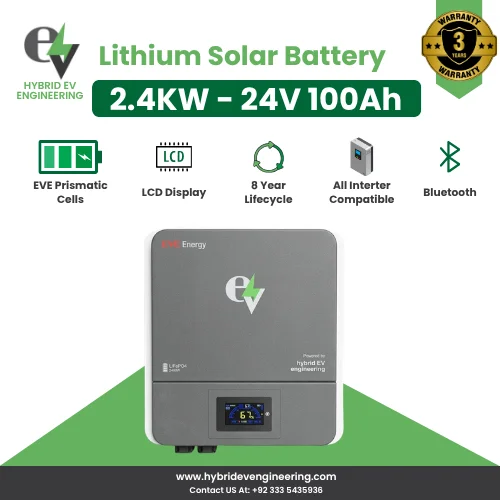
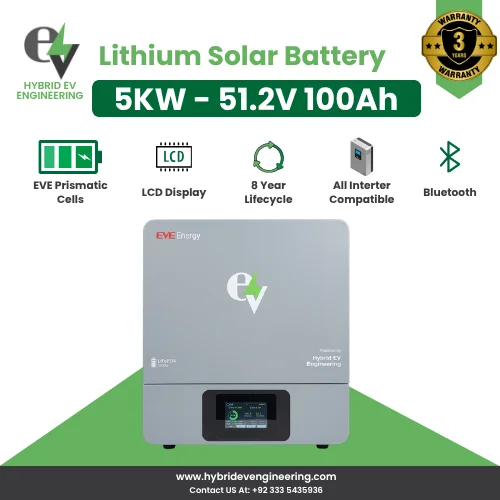
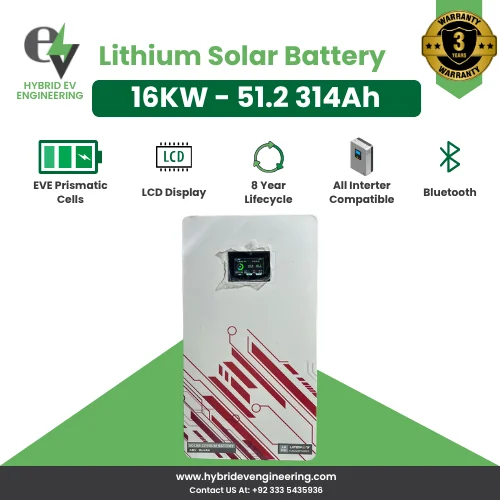
The best lithium solar battery for homes in Pakistan depends on your daily use. For small homes, a 12V 100Ah works. Medium homes need 24V 100Ah. Most standard homes with AC backup fit a 51.2V 100Ah. Large homes need the 16KW. All use EVE cells and smart BMS.
The right battery determines whether your solar system runs your home reliably or leaves you frustrated. The wrong choice means frequent replacements, poor performance, and wasted money. This is why lithium solar batteries are rapidly replacing traditional lead acid options in Pakistani homes.
This guide covers everything you need to know about choosing the best lithium solar battery for your home in Pakistan, including current options, sizing guidance, and what to look for when buying.
Why Choose Lithium Over Traditional Batteries
For decades, Pakistani homeowners relied on lead acid and tubular batteries for solar storage. These technologies served their purpose but come with significant limitations.
Lead Acid Battery Limitations
- Short lifespan: Typically 2 to 4 years before replacement
- Low usable capacity: Only 50% of rated capacity is safely usable
- Slow charging: Cannot accept rapid solar charging
- Heavy and bulky: Difficult to install and move
- Regular maintenance: Water topping required for some types
- Poor performance in heat: Pakistani summers shorten life significantly
Lithium Battery Advantages
- Long lifespan: 8 to 10+ years of reliable service
- Higher usable capacity: 90% to 95% of rated capacity available
- Fast charging: Accepts solar input efficiently
- Compact and lightweight: Easy installation in small spaces
- Zero maintenance: No water topping or cleaning needed
- Better heat tolerance: Performs reliably in hot climates
- Smart monitoring: BMS protection and real-time data
Long Term Cost Comparison
A lead acid battery costing Rs 40,000 lasting 3 years means Rs 13,333 per year. A lithium battery costing Rs 130,000 lasting 10 years means Rs 13,000 per year. The lithium option actually costs less over time while providing better performance, more usable capacity, and zero maintenance.
Understanding LiFePO4 Technology
Not all lithium batteries are equal. The best chemistry for solar applications is LiFePO4 (Lithium Iron Phosphate), and here is why.
Why LiFePO4 is the Best Choice
- Superior safety: No thermal runaway risk like other lithium chemistries
- Long cycle life: 6000+ cycles compared to 1000 to 2000 for other types
- Stable performance: Consistent output throughout discharge
- Wide temperature range: Works reliably in Pakistani climate
- No fire hazard: Safe for home installation
EVE Prismatic Cells Explained
EVE is one of the world’s leading lithium cell manufacturers. Their prismatic cells offer several advantages:
- Higher energy density than cylindrical cells
- Better heat dissipation
- More efficient space utilization
- Longer lifespan in real world conditions
- Consistent quality across cells
Smart BMS Importance
The Battery Management System (BMS) is the brain of a lithium battery. A quality smart BMS provides:
- Overcharge and over-discharge protection
- Cell balancing for maximum lifespan
- Temperature monitoring and protection
- Short circuit prevention
- Real time status monitoring via Bluetooth or LCD
Without proper BMS, even the best cells will fail quickly. Always choose batteries with smart BMS protection.
Best Lithium Solar Batteries Available in Pakistan
Here are our recommended lithium solar batteries for different home sizes and needs.
View All Lithium Solar Batteries
How to Choose the Right Battery for Your Home
Selecting the right battery depends on your specific needs. Use this guide to narrow down your options.
Step 1: Calculate Your Daily Power Consumption
List your appliances and how many hours each runs daily. Multiply wattage by hours to get watt-hours (Wh).
Example for a small home:
- 5 LED bulbs x 10W x 6 hours = 300 Wh
- 3 fans x 75W x 8 hours = 1,800 Wh
- 1 TV x 100W x 4 hours = 400 Wh
- Refrigerator average = 1,500 Wh
- Total: 4,000 Wh per day
Step 2: Determine Backup Duration Needed
How many hours of backup do you need without solar charging? In load shedding areas, plan for at least 6 to 8 hours of backup.
Step 3: Match to Battery Size
| Home Size | Daily Use | Recommended Battery | Use Case |
|---|---|---|---|
| Small (1-2 rooms) | Under 2 kWh | 12V 100Ah | Lights, fans, basic backup |
| Medium (3-4 rooms) | 2 to 5 kWh | 24V 100Ah | Lights, fans, TV, refrigerator |
| Standard (4-5 rooms) | 5 to 8 kWh | 51.2V 100Ah (5KW) | Full appliances + 1 AC |
| Large (6+ rooms) | 8 to 15+ kWh | 16KW Battery | Multiple ACs, full backup |
Step 4: Consider Future Expansion
If you plan to add more appliances or AC units later, choose a slightly larger battery now. Lithium batteries can also be expanded by adding more units in parallel.
What to Look for in a Quality Solar Battery
Not all lithium solar batteries deliver on their promises. Here is what separates quality from cheap imitations.
Genuine Cell Brands
Look for batteries using cells from reputable manufacturers like EVE, CATL, or BYD. These brands maintain strict quality control and provide consistent performance. Avoid batteries that do not specify cell brand or origin.
Smart BMS Features
Quality BMS should include:
- Cell balancing (active or passive)
- Multiple protection features
- Communication capability (Bluetooth, LCD, or both)
- Temperature monitoring
- Current limiting
Cycle Life Rating
Look for batteries rated at 6000+ cycles at 80% depth of discharge. This translates to 10+ years of daily use. Lower ratings mean shorter lifespan and worse long term value.
Warranty Coverage
Quality manufacturers stand behind their products with meaningful warranties. Look for 5+ years of coverage. Short warranties suggest the manufacturer expects problems.
Inverter Compatibility
Verify your battery is compatible with popular inverters used in Pakistan. Most quality lithium batteries work with standard hybrid and off-grid inverters, but always confirm before purchase.
Heat Tolerance
Pakistani summers are harsh. Quality LiFePO4 batteries handle temperatures up to 60°C in storage and operate efficiently in normal Pakistani conditions. Cheap alternatives degrade rapidly in heat.
Common Mistakes to Avoid
Many buyers make these mistakes that cost them money and frustration later.
Buying on Price Alone
The cheapest battery is rarely the best value. A Rs 50,000 battery lasting 3 years costs more long term than a Rs 130,000 battery lasting 10 years. Calculate cost per year, not just upfront price.
Wrong Voltage Selection
Choosing 12V when you need 48V means higher current, more losses, and inefficient operation. Match battery voltage to your inverter and load requirements.
Ignoring BMS Quality
Some sellers offer batteries without proper BMS or with basic protection only. This leads to premature cell damage. Always verify BMS specifications.
Underestimating Power Needs
It is better to buy slightly larger than you need rather than undersized. Lithium batteries dislike running empty repeatedly, and you will likely add more appliances over time.
Choosing Unknown Brands
The market has many unbranded or fake products. Buy from established suppliers who provide proper warranty and after-sales support. Cheap imitations often fail within months.
Skipping Professional Installation
Improper installation can damage the battery and create safety hazards. Use experienced installers who understand lithium battery requirements.
Which lithium solar battery is best in Pakistan for home use?
The best lithium solar battery for homes in Pakistan is the one that matches your daily backup need and inverter voltage. For a small home with basic loads, a 12V 100Ah battery is enough. For a medium home, choose 24V 100Ah. For a standard home that runs an AC, a 51.2V 100Ah battery is the common choice. For large homes or businesses, the 16KW battery gives the most backup.
All these batteries use EVE prismatic LiFePO4 cells and a smart BMS. They come with a 3-year warranty and an 8-year lifecycle. Prices start from Rs 66,000 for the 12V 100Ah and go up to Rs 580,000 for the 16KW model. These prices were checked in October 2026.
To pick the right size, add up the watt-hours of the appliances you want to run during a power cut. Then divide by the battery’s usable capacity. If you are unsure, call or WhatsApp 0333-5435936 for a free quote. The final price is confirmed after your inverter and load are verified.
What should I check before buying a lithium solar battery in Pakistan?
Before you buy, confirm four things: voltage match, capacity, warranty, and delivery. The battery voltage must match your inverter. A 12V inverter needs a 12V battery. A 48V inverter needs a 51.2V battery. Using the wrong voltage can damage the battery or the inverter.
Capacity is measured in kWh. A 51.2V 100Ah battery gives 5.12 kWh. If your home uses 5 kWh per day, this battery gives about one day of backup. For longer backup, choose a larger battery or add more batteries later.
Warranty matters. Hybrid EV Engineering offers a 3-year warranty on lithium solar batteries. Keep your invoice. Delivery is nationwide. Islamabad and Rawalpindi get same-day or next-day delivery. Major cities take 2-3 business days. Other locations take 3-5 business days. Installation is free at the I-9/3 Islamabad workshop. For other cities, wiring guidance is provided.
How much does a lithium solar battery for homes in Pakistan cost in 2026?
Prices depend on capacity. Here are the current prices from Hybrid EV Engineering, checked in October 2026:
| Battery | Capacity | Price |
|---|---|---|
| 12V 100Ah Lithium Solar Battery | 1.28 kWh | Rs 66,000 |
| 24V 100Ah Lithium Solar Battery | 2.4 kWh | Rs 130,000 |
| 51.2V 100Ah Lithium Solar Battery | 5.12 kWh | Rs 235,000 |
| 16KW 51.2V 314Ah Lithium Solar Battery | 16 kWh | Rs 580,000 |
All prices include a 3-year warranty. For a full list, see the Lithium Solar Battery category. For a free quote, call or WhatsApp 0333-5435936.
Frequently Asked Questions
How long do lithium solar batteries last?
Quality LiFePO4 batteries last 8 to 10+ years with proper use. They are rated for 6000+ charge cycles at 80% depth of discharge, which translates to over a decade of daily use in typical home applications.
Can lithium batteries run an AC?
Yes. The 51.2V 100Ah (5KW) and 16KW batteries can comfortably run 1 to 2 inverter AC units along with other appliances. Smaller batteries can run AC for shorter durations or smaller AC units.
Are they safe for home installation?
LiFePO4 chemistry is the safest lithium technology available. Combined with smart BMS protection, these batteries are completely safe for indoor home installation. No fire hazard or thermal runaway risk like other lithium types.
Do I need a special inverter for lithium batteries?
Most modern hybrid and off-grid inverters work with lithium batteries. Some older inverters designed only for lead acid may need configuration changes. Check inverter compatibility before purchase.
What warranty do you offer?
We provide warranty coverage on all our lithium solar batteries. Specific terms vary by product. Visit the individual product pages or contact us for current warranty details.
Can I add more batteries later?
Yes, lithium batteries can be expanded by adding more units in parallel. This allows you to start with what you need now and grow your system as requirements increase.
What is the difference between 12V, 24V, and 48V batteries?
Higher voltage means more efficient power delivery and compatibility with larger inverters. 12V suits small setups, 24V works for medium homes, and 48V (51.2V) is ideal for standard to large homes with significant power needs.
What is the price of a 48V 100Ah lithium battery in Pakistan in 2026?
A 48V 100Ah lithium battery is usually a 51.2V 100Ah model. At Hybrid EV Engineering, the 51.2V 100Ah Lithium Solar Battery costs Rs 235,000. This price was checked in October 2026. It includes a 3-year warranty and an 8-year lifecycle. For a firm quote, call or WhatsApp 0333-5435936.
Which is better for home solar in Pakistan: lead acid or lithium?
Lithium is better for most homes. A lead acid battery lasts 2 to 4 years and gives only 50% usable capacity. A lithium battery lasts 8 to 10 years and gives 90% to 95% usable capacity. Lithium also handles Pakistani summer heat better and needs no water topping. Over 10 years, lithium often costs less per year.
Can I install a lithium solar battery myself?
Basic installation is possible if you follow the wiring guide. But for safety and warranty, professional installation is recommended. Hybrid EV Engineering offers free installation at their I-9/3 Islamabad workshop. For other cities, they provide wiring guidance. Always match the battery voltage to your inverter before connecting.
How do I calculate the right lithium battery size for my home?
List your appliances and their daily watt-hours. Add them up. For example, 5 fans at 75W for 8 hours use 3,000 Wh. A 5.12 kWh battery gives about 5,120 Wh, enough for that load. If you need longer backup, choose a larger battery. Hybrid EV Engineering offers a free battery health diagnosis and sizing help at their Islamabad workshop.
What warranty do I get on a lithium solar battery from Hybrid EV Engineering?
Every lithium solar battery comes with a 3-year warranty and an 8-year lifecycle. The warranty covers manufacturing defects in cells and BMS. Keep your invoice to claim. For warranty support, visit the I-9/3 Islamabad workshop or call 0333-5435936. Free diagnostics are included.
Final Thoughts
Choosing the right lithium solar battery is one of the most important decisions for your solar system. The right battery delivers reliable backup, lasts a decade or more, and provides excellent value over its lifetime.
Key takeaways:
- Lithium batteries cost less over time despite higher upfront price
- LiFePO4 with EVE cells offers the best safety and longevity
- Match battery size to your actual power consumption
- Smart BMS is essential for battery protection and lifespan
- Quality matters more than lowest price
- Plan for future expansion when sizing your system
Whether you need a compact 12V battery for basic backup or a 16KW system for whole house power, the right lithium battery transforms your solar experience from frustrating to reliable.
Browse our complete lithium solar battery collection or learn more about our solar battery services.
Get Free Solar Battery Consultation
 Lithium Solar Batteries
12V 100Ah Lithium Solar Battery: Buying Guide for Pakistan
A practical guide to the 12V 100Ah lithium solar battery in Pakistan: what it powers, what it costs, and when to step up to 24V or 51.2V.
Lithium Solar Batteries
High Voltage Battery: What It Is and Where It Is Used
A high voltage battery moves the same power at lower current, so cables run cooler and inverters stay efficient. Learn what it is, how it differs from low voltage, and where 90V to 1000V packs are used.
Lithium Solar Batteries
Custom High Voltage Battery 90V–1000V: Build Guide for Pakistan
A step-by-step guide to specifying, building and installing a custom high voltage battery 90V–1000V in Pakistan, from voltage matching to load testing and delivery.